
Living in Portugal as an expat off grid : what no one tells you.
Updated: 3 hours ago
I have lived this life for seven years: the actual life, not the reel. If you are picturing a different way to live, the free Wylde Reset is a gentle first step.
I’m on the terrace writing this. River’s loud below. Dogs are flat out. Tortoise is somewhere in the rosemary, doing whatever it does in there. my partner is in the garden. My right side still aches from two weeks of swinging an enxada. ( hoe) I had no business doing in one go.
This is the actual life. Not the reel.

Left the UK in 2019. Sixteen years in corporate life behind me. Title, salary, parking space, the lot. And I knew, in a way you can’t really unknow once you’ve felt it, that I was managing a life. Not living one.
So I left. No plan. No Portuguese. A hilariously optimistic idea of what off-grid actually meant. Tents first. Then a caravan. Then a yurt. Built houses in Fundão where the church bells were louder than anything for miles. Ended up here in Mosteirinho, in a stone house on the Rio Águeda that was already standing when I found it. Different chapter. Different river. Different kind of quiet.
Seven years on. Two episodes of Ben Fogle in 42 countries. Photography in Digital Camera World, Practical Photoshop, Shutterbug. An Airbnb on the river. Coaching practice. Business development work. All of it under WyldeRoots now — the brand I built out of this life rather than into it.
A lot of people are dreaming about doing what I did. If you’re one of them, this is for you.
Before anything else though — let me say this. Portugal is the most extraordinary country I’ve ever lived in. The land is wild and ancient. Food is honest. People are warm. Strangers wave from tractors. Old men give you tomatoes over the wall. Neighbours turn up with bread when the fire’s out.
But Portugal asks something of you. And nobody tells you what.
So here we go. Eight things.

1. Your body becomes the machinery
No plumber’s coming. No electrician. No boiler bloke. There’s you, your back, and what you can lift before something gives.
Two weeks ago I was clearing land with an enxada — the Portuguese mattock every smallholder owns and most foreigners underestimate. Twelve days in, the right side of my abdominal wall went. Walking like an old man ever since.
That’s the cost of the view. Off-grid turns your body into a tool, and tools wear out. The lads I know who’ve been at this longest all have something. A knee. A shoulder. A back. The Instagram version doesn’t mention that the price of independence gets paid in cartilage.
Here’s the flip side nobody mentions either, though.
You get fitter. Properly fitter. Not gym-fitter. Useful-fitter. I’m stronger at 44 than I was at 35 behind a desk. Carry, lift, dig, swing, climb — body does what I ask of it. Back’s straighter. Grip’s stronger. Sleep is deeper because the day actually tired me out. The body that becomes the machinery also gets capable in ways the office version never was.
Stop counting hours worked. Start counting what your body can do that it couldn’t a year ago.
2. February will find you out
Everyone talks about summer. The river, the long evenings, dinners under the vines, the light through the chestnut trees in September. Portuguese summer is genuinely one of the great experiences of European life. Easy to romanticise because it deserves to be.
Nobody talks about February.
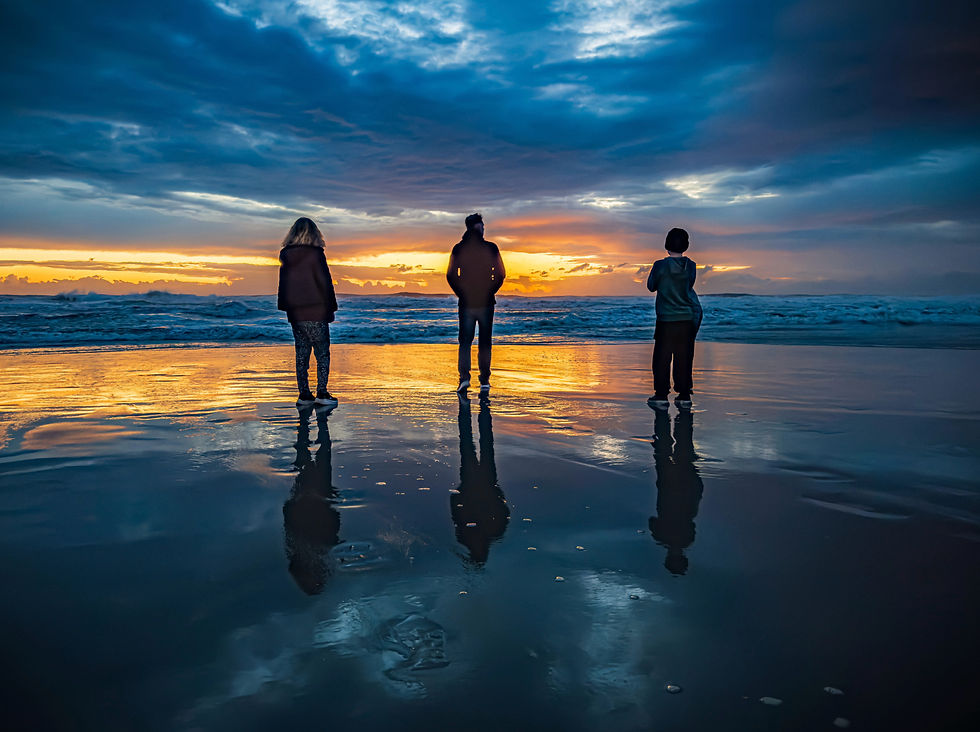
Wet stone. Low cloud. River running brown and fast and unswimmable. Fire eats wood faster than you can chop it. Same three faces. Damp in places you didn’t know could go damp. Grey that gets inside your chest. And no plan B — because the whole point is, you chose it.
If you can’t be alone with yourself — properly alone, no distraction, nowhere to escape to — this life will tell you about it. Loudly. Until you sit with it or you leave.
A lot of people leave in February.

3. Fire season changes everything
From June to October, part of your brain is always watching the ridge.
Central Portugal burns. Not theoretically. Actually. The 2017 fires killed sixty-six people in Pedrógão Grande, hour and a half from where I’m sitting. Every summer since then I’ve watched smoke columns rise somewhere within sight of my land and had to make decisions. Stay. Go. Hose the roof. Pack the dogs. Get Greta out.
It’s been close. End of the track close. Other lands where I could see the flames moving and feel the heat on my face. Reason we’re still here is the bombeiros. And the people on the next land along, and the one after that. They got to it fast. They always do. Some of the bravest people I’ve ever met. Mostly volunteers. Village men and women who drop everything when the siren goes. Turn out in 40-degree heat for their neighbours. For people they barely know. For no money.
That’s Portugal too. That’s who lives here.
You learn to read the wind. Clear the perimeter every spring — fifty metres around any building by law, brush cut back, dead wood out. Miss it, you get fined. Miss it, you might lose the house. You learn the sound of the helicopters before you see them. You learn which neighbours have water tanks.
Keep go-bags packed from May to October. Documents. Passports. Hard drives. Change of clothes. Dogs’ leads by the door. Car always pointed outwards on the track.
Every summer it comes for someone. Anyone who tells you they don’t think about it is lying.
4. The bureaucracy will outlast you
Trying to apostille a UK birth certificate and a Letter of No Trace at the minute, so I can legally marry my partner in the country I’ve lived in for seven years.
Here’s the comedy. Sent to three different buildings. Had to bring lawyers in. The registry office — the people whose actual job this is — didn’t know what paperwork was needed. So they asked ChatGPT in front of me. The one woman in the building who does know only works one day a week. The day she was in, she was too busy to talk.
Not making any of that up.
Nothing here is fast. Nothing. Property regularisation takes years. AL licences take months. Buying land involves notaries, fiscal reps, certified documents, and getting told different things by different people about the same rule.
But here’s the bit I didn’t expect. The slowness isn’t laziness. It’s a different relationship with time. Portuguese people aren’t in a hurry because they understand something the rest of Europe forgot — that rushing ruins most things worth doing. Same slowness that holds your paperwork up for six months is the slowness that means lunch lasts two hours, the café man remembers your order, nobody dies of stress at forty-five.
Come to love it. Nearly broke me first. Both true.

5. The language has sounds your mouth can’t make
Spanish you can blag. French you half-remember from school. Portuguese is a different animal.
European Portuguese has sounds that don’t exist in English. The nasal vowels — ão, ãe, õe — that come out of your nose, not your mouth. The lh in milho. The nh in vinho. The way they swallow whole syllables so está becomes tá and você disappears almost entirely. They talk fast, drop the vowels, stress the wrong bit of the word on purpose. I’m convinced of it.
Seven years in and I still can’t hold a proper conversation. Basics, yes. Bins, builder, ordering food, quick exchange at the câmara. But a real conversation, with all the speed and slang and overlap? Not yet.
I go to a Portuguese workshop once a week. Sit in a class with other people murdering the same nasal vowels. It’s humbling and it’s slow and it’s the only thing actually moving the needle.
Here’s the thing nobody warns you about. Portuguese people will switch to English the moment they hear you struggle. Out of kindness. They’re gracious about it. But it means you have to actively fight to keep practising. Refuse the easy out. Be willing to look stupid for years.
Look stupid most weeks myself. Part of the deal. Every single Portuguese person who’s corrected me has done it with a smile.
Duolingo won’t get you there. App won’t get you there. The thing that gets you there is showing up. Workshop. Café. Neighbour’s kitchen. And slowly, over years not months, letting the sound find your mouth.
If you’re not willing to do that, you’ll always be living next to Portugal. Not in it.

6. It’s cheaper. But it still costs
Catches people both ways.
Genuinely cheaper than the UK. No bills in the way you used to have them. No electric. No water. No council tax that means anything. Food costs a fraction. Wine costs a fraction. A meal out costs what a coffee costs in London. The maths is real.
But it still costs. You pay in tools, and good tools cost. Chainsaw fuel. Replacement panels. Batteries. The well pump that died in August when you needed it most. Materials for the next build, the next repair, the next ruin you decided to bring back. Vet bills. Dog food. Diesel to get to town.
Houses don’t build themselves. Land doesn’t clear itself. Roof doesn’t fix itself.
So yes — cheaper. Significantly. But not free, and not no-money. The trade is, in the UK you pay a lot for a life you mostly don’t enjoy. Here you pay less for a life that’s actually yours. Numbers work. Just work differently than people imagine.
7. You can’t go back even when you want to
Around year three, something happens nobody warns you about.
The old life stops being an option. Not because the door closes — it’s still there. Could get on a plane tomorrow, take a job in London, rent a flat, slot back in. Door’s open.
But the me that fits through it isn’t there anymore.
I sit in restaurants in cities now and my heart rate climbs after an hour. Can’t sleep with traffic. Get tired in groups of more than six. Notice insects nobody else does. Cry at small things — a bird, a tree falling, the light in the kitchen at five in the afternoon. The bloke who spent sixteen years in corporate life was efficient and capable and impressive at dinners. He’s gone. Not coming back.
That’s the thing nobody warns you about. You don’t just change your life. You change. The version of you at the other end is a stranger to the one that walked in.
This country does that to you. The land does it. The pace does it. The people do it. You arrive thinking you’re going to renovate a house, and seven years later the house has renovated you.

8. Still the best thing I ever did
After all of it.
Injuries. Februaries. Fires. Bureaucracy. Language that breaks my mouth open every Wednesday. Money in different shapes. The slow erosion of who I used to be.
After everything.
Still the best thing I ever did. By a distance.
Wake up to birdsong and the river. Coffee on the terrace. Work with my hands and my head in equal measure. Love a woman who loves me back, no city distractions in the way. Photograph things most people walk past. Help others find their version of this through coaching and business development. Drink wine that costs three euros and tastes better than wine that costs thirty in London. Eat tomatoes that taste like tomatoes again. Know my neighbours’ names. Know the names of the hills.
Tired in a way I never was in the boardroom. But tired from my own life now, not someone else’s.
That’s the difference. That’s the whole thing.
-----
If you’re dreaming about your own version of this
Keep dreaming. Portugal will meet you halfway if you let it. Romance is real. Cost is real. Both true.
Don’t come here to escape. Come here to build.
Don’t come here to find peace. Come here to do the work peace asks of you.
Don’t come here because the photos are beautiful. The photos are beautiful because someone — usually me, usually at five in the morning — got up and put the work in.
That’s off-grid. That’s the truth of it.
Seven years in. I’d do it again tomorrow.
Obrigado, Portugal. For all of it.
-----

Work with me
I help people make this kind of leap. Not just to Portugal — to whatever your version of an honest life looks like. Through 1:1 coaching, retreats here in Mosteirinho, and the business development work I do for people building something of their own.
If anything in this landed, the next step is simple.
Whatever brings you here, whether you're questioning the way you live, searching for a different path, or simply feeling that something needs to change, sometimes the first step is allowing yourself to imagine a different way of living.
In A Different Way to Live: How to Change Your Life When It No Longer Fits, I explore what it means to step away from the life you've always known, reconnect with what matters, and begin creating a life that feels more like your own.
For more help, inspiration and practical guidance on creating a life that feels more like your own, visit Wylde Roots, where you'll find more articles, personal insights and resources to help you find your own path.
Or stay on the river at my Airbnb https://www.airbnb.co.uk/rooms/1220308602650176903?unique_share_id=32fab810-0aa1-4cc6-81d3-c0d9cca75ed3&viralityEntryPoint=1&s=76
Alex Sully
Mosteirinho, central Portugal



lv88.com mình thấy dạo này hay bị nhắc tên nên tiện tay ghé thử cho biết. Vào cái là thấy họ làm trang theo kiểu gọn gàng, không nhồi chữ một cục nên nhìn đỡ mệt mắt. Mình chỉ lướt nhanh mấy khối nội dung thôi, thấy phần giới thiệu với mấy tiêu đề kiểu “khám phá kho giải trí” đặt khá ngay ngắn, ai mới vào chắc cũng bắt nhịp được. Thử mở trên điện thoại thì ổn áp hơn mình tưởng, kéo lên kéo xuống mượt, không bị lệch khung hay chữ chồng lên nhau. Mình không ngồi đọc kỹ, nhưng cảm giác họ có chăm chút trải nghiệm đa thiết bị như họ nói. Nói chung bố…
tối qua mình lướt kết quả bóng đá trên điện thoại lúc nghỉ tay vài phút. Vừa vào là thấy cách họ bày nội dung theo từng khối khá rõ, mắt mình chỉ cần kéo xuống là phân biệt được đâu là bảng số liệu, đâu là danh sách, nhìn một lượt là nắm được chứ không phải rà từng dòng, với lại chữ và khoảng cách giữa các hàng ổn nên đọc nhanh vẫn kịp. Mình cũng để ý cái menu đặt khá lộ, bấm qua lại mấy mục không bị khựng, kiểu chuyển trang hay đổi phần hiển thị đều mượt, không phải tìm nút ẩn hay chạm trượt nhiều lần mới ra đúng chỗ. Nói chung dùng…
nổ hũ online mình lúc đầu cũng hơi ngại vì sợ kiểu trang “top 10” hay nhồi chữ rồi khó đọc, mà vào thử thì lại thấy dễ chịu hơn tưởng tượng, bố cục chia thành mấy khối riêng nên mắt mình bắt nhịp nhanh, không phải kéo lên kéo xuống để tìm ý chính. Cái tiêu đề “Top 10… tháng 9 2026” để ngay trên cùng nên biết họ đang cập nhật theo thời điểm. Phần dưới họ có nhắc ngắn gọn mấy tiêu chí kiểu RTP với tốc độ nạp–rút nên mình hiểu họ đang so sánh theo hướng nào. Menu nhìn khá rõ, bấm qua lại không bị lạc. Nói chung đọc lướt cũng ổn. Mình thích…
SUNWIN.COM làm mình nhớ mấy trang giải trí mình hay lướt hồi trước, kiểu mở lên là có sẵn mọi thứ trong tầm mắt nhưng bố cục nhìn gọn gàng hơn nên đỡ phải đảo mắt nhiều; mình chỉ ghé qua vài phút thôi, chủ yếu xem trang chủ họ sắp xếp ra sao và có dễ nắm nội dung chính không. Cái tiêu đề “Sunwin - Trang Chủ Chính Thức Không Bị Chặn Của Sun.Win 2026” để ngay ngắn nên nhìn phát là biết đang ở đúng bài. Kéo xuống cũng mượt. Các khối nội dung nối nhau khá liền. Chữ trong khung đọc ổn, không bị rối. Nhìn chung là nhẹ nhàng. Trên trang chủ, heading “Sunwin -…
https://thoitiethomnay.org/ mình mở ra là thấy ngay thông tin thời tiết hiện tại, nhìn cái con số 30°C với “cảm giác như” 33°C là biết hôm nay nóng kiểu gì rồi. Mình thích kiểu trình bày khá thoáng, các khối thông tin đặt tách bạch nên liếc nhanh vẫn bắt được ý chính, không cần đọc dài dòng mới hiểu. Phần chọn tỉnh/thành để xem dự báo cũng nằm chỗ dễ thấy, bấm qua lại mượt, hợp kiểu mình hay đổi địa điểm liên tục trong ngày (nhất là lúc chuẩn bị đi đâu đó). Mình để ý số liệu có vẻ cập nhật liên tục, nên quay lại sau vài tiếng là các chỉ số đã khác. Nói chung…