
The Life You’re Living Isn’t Yours. The Day I Admitted That, My Real Life Began.
Updated: Jan 26

The Refusal
Fourteen years ago, I walked away from managing an £85 million company and never looked back.
I haven’t had a job since. Not a single day of trading my hours for someone else’s profit. Not one morning alarm set for obligations I didn’t choose. Not one performance review, not one fluorescent-lit meeting about metrics that measured everything except whether anyone in the room was actually alive.
Fourteen years of freedom. And I need you to understand - it wasn’t luck. It wasn’t inheritance. It wasn’t some mystical awakening that descended upon me like grace.
It was refusal.
A single, quiet, relentless refusal to accept the story I’d been handed at birth. The story that said: work hard, be good, climb the ladder, delay your joy, earn your rest, and maybe - maybe - at the end of your useful years, you’ll get a few tired seasons of doing what you actually want.
I looked at that story. I watched the people living it. I saw where it led.
And I said no.

What I Saw Behind the Curtain
Let me tell you what I saw in those corporate years, because it matters. It’s the reason I do what I do now.
I managed an operation turning over £85 million. That means I had access. I saw behind the curtain. I sat in rooms with people who had climbed higher than I ever intended to climb, people who had won the game by every measure society offers.
And they were empty.
Not sad, exactly. Emptiness isn’t sadness. Sadness is alive - it moves, it aches, it wants. These people had something worse. They had absence. A hollow space where their aliveness should have been. They’d traded it away so gradually, so incrementally, one compromise at a time, that they couldn’t even remember what they’d lost.
They talked about retirement like prisoners talk about parole. Someday. When I’ve put in enough time. When the numbers line up. Then I’ll live.
But I watched their faces. I watched their eyes when they thought no one was looking. And I knew - with the certainty you feel in your bones before your mind catches up - that “someday” was a lie they told themselves to survive the way they’d chosen to die.
The ladder they were climbing leaned against a wall that led nowhere. And the higher they climbed, the harder it became to admit they’d spent their lives ascending toward nothing.
I was in my twenties when I understood this. And understanding it changed everything.

I Was Never Asleep
Here’s what people get wrong about my story.
They see the life in nature. The stone house in rural Portugal. The river I swim in. The Ben Fogle documentaries broadcast to 42 countries. They assume I had some dramatic awakening. Some crisis that shattered my illusions and forced me to see the truth.
No.
I was awake the entire time. That was the problem. That was always the problem.
Even while I sat in those meetings, I was saving every spare pound for travel. Not holidays - escape. Proof of concept. Evidence that the world was larger than what I’d been shown, that life could feel like something other than slow suffocation.
I swam with sharks in open water, whitewater rafted in crocodile waters, skydived over the Great Barrier Reef and felt more alive in that terror than I’d felt in years of safety. I walked through night markets in countries where I couldn’t read the signs, eating food I couldn’t name, talking with hands and smiles to people whose language I’d never speak - and
I was home. More at home in that disorientation than I’d ever been in the predictable world I was supposed to want.
I came alive in jungles. In deserts. On islands .In cities that didn’t know my name or care about my title. I came alive whenever I stripped away the story and stood naked in the chaos of actual existence.
And then I’d fly back. Walk into the office. Feel the walls closing in like the sides of a coffin slowly narrowing.
I knew, even then, that I was dying. Not physically. Something worse. I was dying the way most people die - incrementally, invisibly, one compromised morning at a time.
So I started planning my escape. Not someday. Now.

Freedom With a Price Tag
The first property I bought was a wreck.
Nobody wanted it. It sat there, forgotten, a problem to be solved. I saw something else. I saw freedom with a price tag.
I bought it cheap. I fixed it with my own hands. I learned the walls, the wiring, the way water moves through old pipes. I lived in it while I worked, learning the neighbourhood, the shortcuts, the place where the light fell best in late afternoon.
Then I sold it for more than I paid. And I understood something that changed my life: money could work while I didn’t. Assets could grow while I slept. Time could be bought back, hour by hour, from the machine that wanted to consume it.
I did it again. And again. Different towns. Different countries. Run-down houses that nobody else could see the potential in. I’d buy them broken, make them beautiful, learn the land around them, then sell and move on - or keep them and let them earn.
I ran Airbnbs where my entire workday was one hour. Sixty minutes of cleaning, fresh sheets, handing over a key. Then the rest of the day - every glorious hour of it - belonged to me.
To nature. To photography. To wandering through forests with a camera, learning the secret lives of insects, the way light moves through leaves, the silence that teaches you who you are.
To travel. Always travel. The road as classroom, as mirror, as medicine.
And to the work that would eventually become my calling: the conversations that crack people open.

The Places I’ve Called Home
I’ve lived in bell tents with canvas walls that breathed with the wind. I’ve lived in tipis where smoke rose through the centre and stars appeared through the opening like a private cinema of the infinite. I’ve lived in yurts, in caravans, in structures most people wouldn’t consider habitable.
I’ve lived in stone houses older than any nation I was taught to pledge allegiance to. Houses where the walls remember centuries of fires, centuries of families, centuries of people being born and dying and loving and grieving in the same rooms where I now sleep.
I’ve moved through Portugal like water finding its level. Not as a tourist, passing through with a camera and an itinerary. As someone who stays. Who learns which baker opens earliest and which neighbour has eggs and where the river pools deep enough for swimming.
I know the hidden places now. The waterfalls that don’t appear on maps. The villages where old women still make bread the way their grandmothers did. The corners of this country that haven’t been discovered yet, that still hold their silence like a secret.
Fourteen years without a job. Fourteen years of waking up without an alarm, without obligations I didn’t choose, without the slow bleed of trading my hours for someone else’s profit.
And in all that reclaimed time - all those thousands of days that would have been meetings and metrics and fluorescent lights - I’ve done the real work.
The Slap
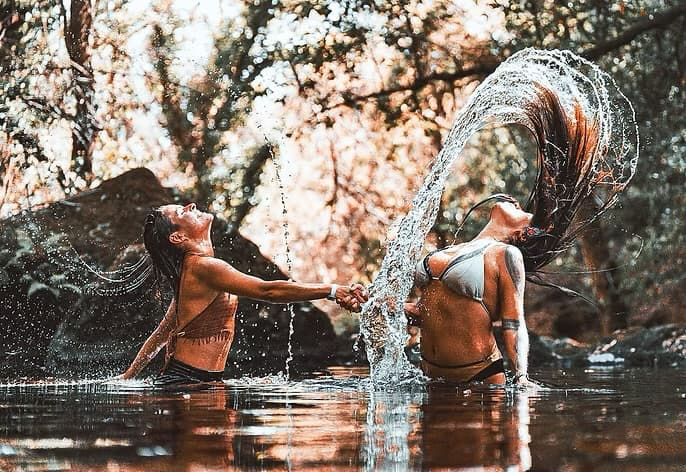
I slap people awake. A brain slap.
I’ve been doing it my whole life, long before I had language for it, long before anyone paid me, long before I understood it was my purpose.
In the corporate years, it looked like conversations that went too deep. Questions in break rooms that made people uncomfortable. That made them think. That cracked the surface of their performance just enough for something real to leak through.
I remember a woman - middle management, mid-thirties, the kind of put-together that takes hours to construct each morning. We were talking about nothing. Quarterly targets. Weekend plans. The anaesthetic small talk of office life.
And I asked her something. I don’t even remember what. Something simple. Something about what she actually wanted.
She burst into tears. Right there in the break room with the bad coffee and the passive-aggressive signs about cleaning up after yourself. She cried like something had broken open, and she told me no one had ever asked her that. Not once. Not in her whole life.
That’s when I knew. Whatever I was supposed to do with my time on this planet, it involved that. That moment. That crack in the performance. That flash of real feeling breaking through the anaesthesia.
I didn’t know what to call it then. I do now.
The slap.

They started arriving
Ben Fogle found me out here. Twice.
“New Lives in the Wild” showed my story to 42 countries. Millions of people watched a former corporate man swimming in rivers and cooking over fire and laughing without reason - laughing the way children laugh, without self-consciousness, without performance, without the careful calibration of adult joy.
Something in them stirred. I know because they started arriving.
They fly to Portugal. They rent cars and drive hours down roads that become dirt tracks that become paths that become something barely navigable. They pass the last village, the last shop, the last sign of the world they know. They arrive at a stone house by a river, a man waiting who looks nothing like what they expected and exactly like what they needed.
They sit across from me with the same look I’ve seen a thousand times. In boardrooms. In pubs. In airports at 3 AM when the masks slip because everyone’s too tired to perform. In random conversations on random streets in random countries.
The look that says: I’m disappearing. I don’t know who I am anymore. I’ve done everything right and I feel nothing. Help me. Please. Help me feel something again.
I know that look. I’ve been interrupting it for decades.
The Many Forms of Waking Someone Up
The slap takes many forms. That’s what I’ve learned. There’s no single technique, no formula, no seven-step process for waking someone up.
Sometimes the slap is just arrival.
They step out of their cars after hours on roads that tested their suspension and their certainty. They look around. They see the stone walls, the garden, the river, the nature that wraps around everything. They see a man who once managed £85 million now barefoot in the dirt, more at peace than anyone they’ve ever encountered.
Their whole system glitches. Everything they believed about what’s necessary, what’s required, what’s possible - it short-circuits. They stand there with their expensive shoes and their optimised lives and their carefully constructed identities, and they don’t know what to say.
You can just… live? Like this? Without everything I’ve been killing myself to maintain?
That’s a slap. I don’t have to say a word. The way I live says it for me.
Sometimes the slap happens in public. Anywhere. Everywhere. I’ve developed eyes for it now - I can spot someone on the edge of feeling something real from across a crowded room.
There’s a flicker. Behind the eyes. A moment where the mask slips and something true tries to surface. Most people smother it instantly. They check their phone. They order another drink. They crack a joke. They retreat to the safety of performance before anyone notices they almost felt something.
I don’t let them.
I cross the room. I say something. A word. A question. Sometimes just eye contact that holds a beat longer than comfortable. Just enough to keep that flicker alive. Just enough to say: I see you in there. The real you. Don’t go back to sleep.
Sometimes the slap is buying someone a drink.
I see them - sitting alone, wrestling with something, standing at a crossroads they can’t quite name. They’re on the edge of a decision. The edge of finally listening to the voice inside that’s been whispering for years. And they’re about to doubt themselves. About to slide back into the familiar, the safe, the slow death of the known.
I buy them a drink. I sit down. I say: Whatever you’re considering - do it. Don’t go back. Keep walking toward what scares you.
Sometimes that’s all someone needs. Permission from a stranger. Proof that someone else sees what they’re trying to become.
Sometimes the slap is sitting with someone already broken open.
They’ve cracked. The performance has shattered. They’re in the freefall between who they were and who they might become, and it’s terrifying, and they don’t know if they’re having a breakdown or a breakthrough.
They don’t need disruption. They need witness. They need someone to sit with them in the wreckage and say: Yes. What you’re feeling is real. This is what waking up feels like. It hurts because you’re coming back to life. Keep going. Don’t stop. Don’t let the fear send you back to sleep.
I say what I see. Every time. Without filter. Without the careful calibration of what’s appropriate or polite or expected.
But always - always - with love.
That’s the part people don’t understand. The slap isn’t violence. It’s not cruelty. It’s not the ego trip of someone who thinks he knows better than everyone else.
It’s love. The realest kind. The kind that cares more about your aliveness than your comfort. The kind that would rather see you cry today and wake up tomorrow than smile politely while you sleepwalk off a cliff.

The Tells of a Sleepwalker
How do you know if you’re sleepwalking?
The body knows. It always knows, even when the mind refuses to listen.
You dread Mondays. Not occasionally, the way everyone dreads the end of a holiday. Ritually. Religiously. Every single week, a small death as Sunday evening arrives. That dread has become so familiar you’ve stopped noticing it. It’s just weather. It’s just how life feels.
It’s not how life feels. It’s how your life feels. And that’s information you’ve been ignoring.
You’re tired in ways sleep can’t fix. You’ve tried everything - the supplements, the apps, the sleep hygiene routines, the expensive mattresses. Nothing works because the exhaustion isn’t physical. It’s existential. You’re tired of pretending. The energy required to perform a life you never chose is draining you faster than any amount of rest can replenish.
You feel most like yourself in stolen moments. On holiday. Early morning before anyone else wakes. Late at night when the responsibilities release their grip. In those brief windows, you catch glimpses of someone you almost recognise. Someone lighter. Someone curious. Someone who might actually enjoy being alive.
Then the window closes. The performance resumes. And you tell yourself this is just how it is. This is adulthood. This is responsibility. This is real life.
But here’s the question you’ve never let yourself ask: Why have you designed a “real life” you need to escape from?
You’ve achieved what you were supposed to achieve. The milestones. The markers of success. You’ve checked the boxes, climbed the rungs, collected the evidence that you’re doing it right. And you felt almost nothing. A brief flicker of satisfaction, maybe. A moment of relief. Then the goalpost moved - as it always moves - and you were running again, chasing the next thing that might finally make you feel like you’ve arrived.
You’re beginning to suspect, in the quiet moments you try to avoid, that arrival will never come. That the game is designed to keep you running. That you will spend your entire life chasing a feeling of enoughness that the system will never allow you to reach.
You trade hours for money and tell yourself it’s temporary. Just until you’re stable. Just until you’ve saved enough. Just until the kids are grown, the mortgage is paid, the circumstances are right.
It’s been years. Maybe decades. And the circumstances are never right. They will never be right. The “temporary” has become your entire life.
You can list your accomplishments, but you can’t remember the last time you felt something without performing it. Joy has become something you stage for photographs. Sadness has become something you manage rather than feel. You’ve become so skilled at the performance that you’ve forgotten there was ever anything underneath it.
And somewhere - deep down, in the place you’re afraid to look - you know you’re running out of time.

The Design Problem Nobody Solves
Here’s what nobody tells you about freedom: it’s not expensive. It’s not reserved for the privileged few. It’s not a reward you earn after decades of suffering.
It’s a design problem. And most people never solve it because they never let themselves believe it’s solvable.
I don’t have family money. I didn’t inherit property or connections or a safety net. I didn’t win a lottery or catch a lucky break that explains everything.
I just refused.
I refused to accept the standard equation: trade your life for security, spend your days earning the right to enjoy your evenings and weekends, then maybe - if you’re lucky, if you stay healthy, if the market doesn’t crash, if the company doesn’t downsize - you’ll get a few tired years at the end to do what you actually want.
I looked at that equation and I saw it for what it was: a bad deal. A terrible deal. A deal that benefits everyone except the person signing it.
So I reverse-engineered a different life.
What’s the minimum I actually need? Not what society says I need. Not what the advertisements have convinced me I need.
What do I actually require to be alive, to be sheltered, to be fed, to be free?
The number is smaller than you think. It’s almost always smaller than you think.
What assets can work while I don’t? What can I build or buy or create that generates value without consuming my hours?
Property was my answer. It might not be yours. But the principle is universal: stop trading time for money and start building things that compound while you sleep.
How do I buy time instead of things?
This is the key. The secret. The thing that changes everything once you understand it.
Every purchase is a trade. You’re not spending money - you’re spending the hours of your life it took to earn that money. That car isn’t £30,000. It’s two years of your existence. That house extension isn’t £50,000. It’s three years of your irreplaceable hours on this planet.
Once you see purchases this way, your priorities transform. You stop asking “can I afford this?” and start asking “is this worth the hours of my life it costs?”
I bought time. One property at a time. One hour of work a day. One radical refusal to believe the lie that joy must be earned through suffering.

The River knows
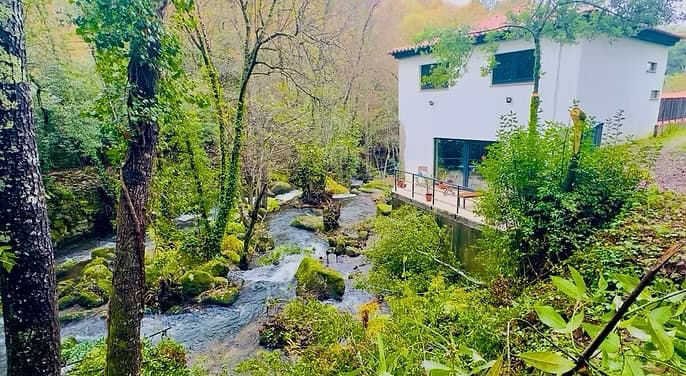
Now I live in a stone house in rural Portugal, surrounded by nature. A river runs beside my door - clean, cold, ancient. I swim in it daily, not for exercise, but for remembering.
The river doesn’t care about my story. It doesn’t care about my past, my achievements, my failures, my fears. It doesn’t care about the articles or the documentaries or what anyone thinks of how I live.
It just moves. It just is.
Every time I step into that water, I practise being that simple. That unburdened. That free of the narratives that imprisoned me for the first part of my life.
The cold shocks the system. Wakes up nerves that had gone dormant. For a moment - just a moment - there’s nothing but sensation. Pure experience. Unfiltered reality.
No past. No future. No story. Just the immediate, undeniable fact of being alive.
That’s what I’m chasing. That’s what I’m offering. That’s what most people have forgotten is even possible.
The river knows what we’ve forgotten: You don’t earn aliveness. You don’t perform your way to presence. You don’t achieve your way to peace.
You stop. You feel. You let the current take everything that was never really yours to begin with.

I offer disruption
I’m respectful kind and honest but I don’t do gentle. Gentle doesn’t wake people up. Gentle lets people stay comfortable in their prisons.
I offer disruption. The kind that rewires you at the level of identity. The kind that makes the old patterns impossible to return to because you’ve seen too clearly, felt too deeply, understood too completely to ever pretend again.
People cry here. They cry more than they’ve cried in years, sometimes decades. All the grief they’ve been postponing, all the loss they’ve been managing, all the sadness they’ve been too busy to feel - it comes flooding up when there’s finally space for it.
They rage. At parents who handed them scripts they never asked for. At systems that consumed their best years. At themselves, for waiting so long, for losing so much time to the performance.
They grieve. For the years they can’t get back. For the life they might have lived. For the person they were before they learned to pretend.
They shake. Literally shake. The terror of not knowing who you are without the mask, without the role, without the identity you’ve spent your whole life constructing - it lives in the body. It trembles its way out.
And then - on the other side of all of it - they come alive.
Not happy in the Instagram way. Not peaceful in the yoga-retreat way. Alive. Actually alive. Feeling things they forgot they could feel. Wanting things they forgot they were allowed to want. Present in their own existence, in their own body, for the first time in years or decades.
That aliveness doesn’t come from adding something. It comes from stripping everything away until only what’s real remains.
The life we built
I live here with my partner Greta. She has her own story of choosing differently, her own path to this place at the edge of the map. We swim in the river together. We live by rhythms older than civilisation - rising with light, resting with darkness, eating what grows, feeling what comes.
We’ve stripped away almost everything the modern world told us we needed.
We don’t have careers. We have work that matters.
We don’t have a lifestyle. We have a life.
We don’t have security in any form the system recognises. We have something better: the knowledge that we’re actually living, actually here, actually using these finite days for something more than preparing for a future that might never come.
The emptiness that haunted me in the corporate years - the hollow place where feeling should have been - it filled itself. Not with achievements or possessions or status. With presence. With attention. With the simple, radical act of being where I am instead of racing toward where I’m supposed to be.

The invitation
If you’ve read this far, something in you is already awake.
It’s been awake for a while. Maybe years. Maybe your whole life. Watching. Waiting. Whispering things you’ve been too busy or too scared to hear.
That part of you isn’t fooled by the performance. It knows the truth you’ve been avoiding. It’s been trying to get your attention through the exhaustion, the dread, the quiet desperation, the feeling that something essential is missing no matter how much you achieve.
That part of you brought you here. To these words. To this moment.
This is your invitation.
Not to do what I did. My path is mine. The stone house, the river, the Portuguese wilderness - that’s the form my freedom took. Yours will look different.
But the principle is the same. The refusal is the same. The willingness to stop performing and start living is the same.
I work with people who are ready. Not curious - curiosity is cheap. Not interested - interest doesn’t change lives. Ready. Ready to feel what they’ve been numbing. Ready to face what they’ve been avoiding. Ready to lose who they’ve been pretending to be so they can discover who they actually are.
Sometimes that’s one conversation. A single session that cracks the foundation of everything. You’d be surprised how quickly a life can change once someone finally gives you permission to see what you’ve been hiding from yourself.
Sometimes it’s longer. A week here, in the wilderness, stripped of distractions, facing the only question that matters.
Who are you when you stop pretending?
That question terrifies most people. They’ll do almost anything to avoid it. They’ll work eighty-hour weeks. They’ll scroll for hours. They’ll medicate and meditate and optimise and achieve - anything to avoid the silence where that question lives.
But the question doesn’t go away. It waits. It waits your whole life if it has to. And one day - on your deathbed if not before - you’ll have to answer it.
I’m suggesting you answer it now. While there’s still time to live differently.

The crack that won’t close
The slap has already landed.
You felt it somewhere in these words. A jolt. A recognition. A crack in the wall you’ve built around the part of you that knows.
That crack won’t go away. You can ignore it. You can scroll to something else, get busy, return to the performance and pretend this didn’t happen.
But you’ll know. In the quiet moments. In the early morning before the mask goes on. You’ll know there’s something else. Another way to be human. Another way to spend these impossible, unrepeatable days.
And you’ll wonder what would have happened if you’d followed the crack instead of sealing it over.
I’m here when you’re ready.
The river’s cold. The silence is deep enough to hear your own heartbeat.
And somewhere in that heartbeat is the answer you’ve been running from your whole life.
Come find it. At https://www.wylderoots.org/retreat


.png)
Comments